
Inflation based on the Wholesale Price Index cooled to a 5-year low of 1.77 per cent in October driven by softening prices of fuel and food items.
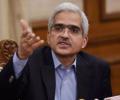
The Reserve Bank of India Governor Shaktikanta Das on Monday said that the "momentum of inflation is on a downward slope" and the central bank would continue to strike a delicate balance between the need to contain price rise and ensure economic growth. The Reserve Bank's inflation projections, Das said, are "robust" but contingent on downside and upside risks associated with the movement of global crude oil prices. The RBI takes into account a particular range within which crude prices are expected to fluctuate considering all the factors that can be anticipated and that can be sort of foreseen as of today, he said.

The benchmark Sensex is 2.4 per cent shy of a new lifetime high but the market capitalisation (m-cap) of all companies listed on the BSE is already in the record books. At Thursday's (August 18) closing price, the total m-cap of 4,776 firms on the BSE stood at Rs 280.5 trillion, surpassing the previous high of Rs 280 trillion on January 17. This, even if the Nifty Midcap 100 is currently 5.4 per cent below its lifetime high, while the Nifty Smallcap 100 index is down over 20 per cent.

India should be prepared for lower GDP growth of around 7 per cent in 2008-09, according to the Mid-Year Review of the finance ministry that was tabled in Parliament on Tuesday.

Inflation is expected to moderate to 6.5-7 per cent by March end but spiralling global crude oil prices pose a challenge in the coming months, said the Economic Survey 2011-12.

The Reserve Bank on Wednesday hiked key benchmark policy rate by 25 basis points to 6.5 per cent, citing sticky core inflation. This is the sixth time interest rate has been hiked by the Reserve Bank of India (RBI) since May last year, taking the total quantum of hike to 250 basis points. Announcing the bi-monthly monetary policy, RBI Governor Shaktikanta Das said the Monetary Policy Committee (MPC) by a majority decided to raise the policy repo rate by 25 basis points and keep a 'strong vigil' on inflation outlook.

Investors turned cautious weighing weak GDP numbers and continued drop in automobile sales, bringing banking and auto sector stocks under pressure.
The domestic market has posted its third straight weekly gain, supported by positive global cues, strong foreign fund inflows and good numbers from some companies.
In the current cycle, the capital inflows have been even larger, resulting in a much higher growth push. During the 1990s cycle, the capex cycle recovered sharply from lows with the support of positive sentiment for emerging markets.

It is time for the three finance ministers of the 1990s to reveal the real hero, says T C A Srinavasa-Raghavan.
The apex bank's observation on Tuesday comes at a time when global markets remain uncertain about the overall impact of the tsunami and the subsequently unravelling nuclear crisis in Japan.

The Reserve Bank hinted at a marginal hike in key policy rates when it reviews its monetary stance tomorrow, saying inflation was still above the comfort zone and that there was uptick in credit to non-food sectors.

The rupee recovered 20 paise to close at over three-week high of 60.47 against the US dollar in the previous session on Friday following strong local equities and capital inflows.

'The Fed rate will peak in the range of 5.1-5.3 per cent during the second quarter of CY23 and will most likely stay there for a while before rate cuts start in CY24.'

Domestic food price inflation has witnessed a high volatility since mid-2009 due to both structural and transitory factors and a significant part of the recent increase is due to structural constraints, the RBI said in its third-quarter monetary policy review for FY 11.

The Reserve Bank may be hitting the end of its tolerance for high inflation and will most likely hike interest rates in the first half of 2022, analysts said on Friday. The central bank will also start rolling back its accommodative policies which have led to easy liquidity conditions, they said. The view from analysts came even as inflation cooled down to 5.6 per cent for July, after two months of breaching the upper end of the RBI's tolerance band of 6 per cent.

India's economy is unlikely to see double-digit growth and may grow between 8 per cent and 9 per cent this fiscal year (2021-22, or FY22), against the estimated 11.5 per cent, according to leading economists and rating agencies. The downward revision of growth projections to as low as 10 per cent is mostly on account of stringency in restrictions by states, relatively slow vaccination pace, and the possibility of a third wave of the pandemic. However, they say the impact will not be as severe as the first wave, and expect the first quarter to see positive growth.

'RBI is already late in addressing inflation pressures.'

'The idea is to invest where there is opportunity.'
.jpg)
Many countries, including Japan, are having deflation and they are trying to go back to an era of inflation.

Fund mobilisation by companies through equity and debt routes has dropped 20 per cent in 2022 to nearly Rs 11 lakh crore, as exuberance dwindled this year due to expensive credit avenues and volatile markets. The first half of 2023 could continue to remain challenging. The year 2021 was extraordinary for fundraising from the equity and debt routes, while 2022 has seen a slowdown in capital raising owing to elevated volatility provoked by unprecedented inflation globally and the Russia-Ukraine war.

The central bank had revised its inflation forecast significantly downward in the last policy
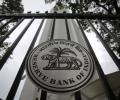
By no means do economists see the Reserve Bank of India stop at just a 25-bp cut. Some of the economists such as Soumyakanti Ghosh of State Bank of India are of the firm view that rates have room to fall by a total of 75 bps in the current financial year, starting with 25 bps in the August 7 policy.

Equity benchmark Sensex tanked over 1,000 points in the opening session on Friday tracking losses in index majors ICICI Bank, HDFC twins and Reliance Industries amid a negative trend in global markets.

DBS called Rajan's decision not to seek an extension as a 'negative surprise'.
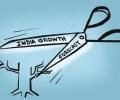
The International Monetary Fund (IMF), in its latest World Economic Outlook report, has slashed its forecast for India's FY23 gross domestic product growth to 8.2 per cent from 9 per cent, saying that higher commodity prices will weigh on private consumption and investment. This was one of the steepest cuts for emerging economies compared to the IMF's January WEO forecasts. Saying that global economic prospects have worsened significantly due to commodity price volatility and disruption of supply chains caused by the war in Europe, IMF cut its global growth outlook for calendar year 2022 to 3.6 per cent from 4.4 per cent, and said both Russia and Ukraine could experience large GDP contractions.

Armed with necessary macro and micro growth drivers, India is on its way to becoming the fastest growing major economy in the world, a finance ministry report said. Rapid vaccination and teeming festivities will push India's ongoing recovery resulting in narrowing of demand-supply mismatches and greater employment opportunities, as per the monthly Economic Review prepared by the ministry.

Declining price of vegetables pulled down inflation to over three-year low of 5.96 per cent in March, core inflation moderated to 3.5 per cent and food price inflation also eased to 8.2 per cent, which is likely to prompt the RBI to consider a rate cut in its annual monetary policy next month.

With a view to tame the inflation -- 8.66 per cent in April -- the RBI has increased its key rates eight consecutive times over the past 12 months, the last being the higher-than-expected 50 bps hike on May 3.
Second-best performer after Brazil so far this year.

She was born in Farrukhabad and went to the US to pursue her master's degree and a Ph.D.

India's factory output climbed 22.4 per cent in March, benefiting from the base effect of the lockdown-marred month a year back as well as a turnaround in the manufacturing sector, while retail inflation slipped to a three-month low of 4.29 per cent in April. The high positive annual growth in the index of industrial production (IIP) in March 2021 came on back of a contraction of (-)0.9 per cent and (-)3.4 per cent in January and February 2021 respectively, according to the data released by the National Statistical Office (NSO) on Wednesday. This turnaround was led by recovery in the mining, manufacturing and electricity sectors.

The S&P BSE Midcap and the S&P BSE Smallcap indices added 0.5% and 0.7%, respectively
.jpg)
BSE auto index surged 2%, capital goods, healthcare and oil & gas indices also up.

Ahead of the Budget, the Survey made a case for gradual exit of stimulus provided to the industry.

He warned low interest rates globally could distort markets and would be difficult to abandon

The Nikkei India Manufacturing Purchasing Managers' Index (PMI) stood at 47.9 in July, down from 50.9 in June, its lowest mark since February 2009, and highlighted the first deterioration in business conditions in 2017 so far.

Earnings growth, attractive valuations and change in FPI flows from negative to positive over the next 12 months are some of the key triggers for an upside. "A poor monsoon, high inflation and further rate hike are some of the key risks

Rising crude oil prices, traction in China equities and inflation concerns back home are casting a shadow on the Indian equity markets in the short term, believe analysts at Jefferies. They said this could see the markets remaining range-bound in the near term before the next leg up.

The banking sector is set to move at a fast pace from hereon.
